Careers in Animal, Farming & the Environment: Future Opportunities, Career Scope and Professional Growth
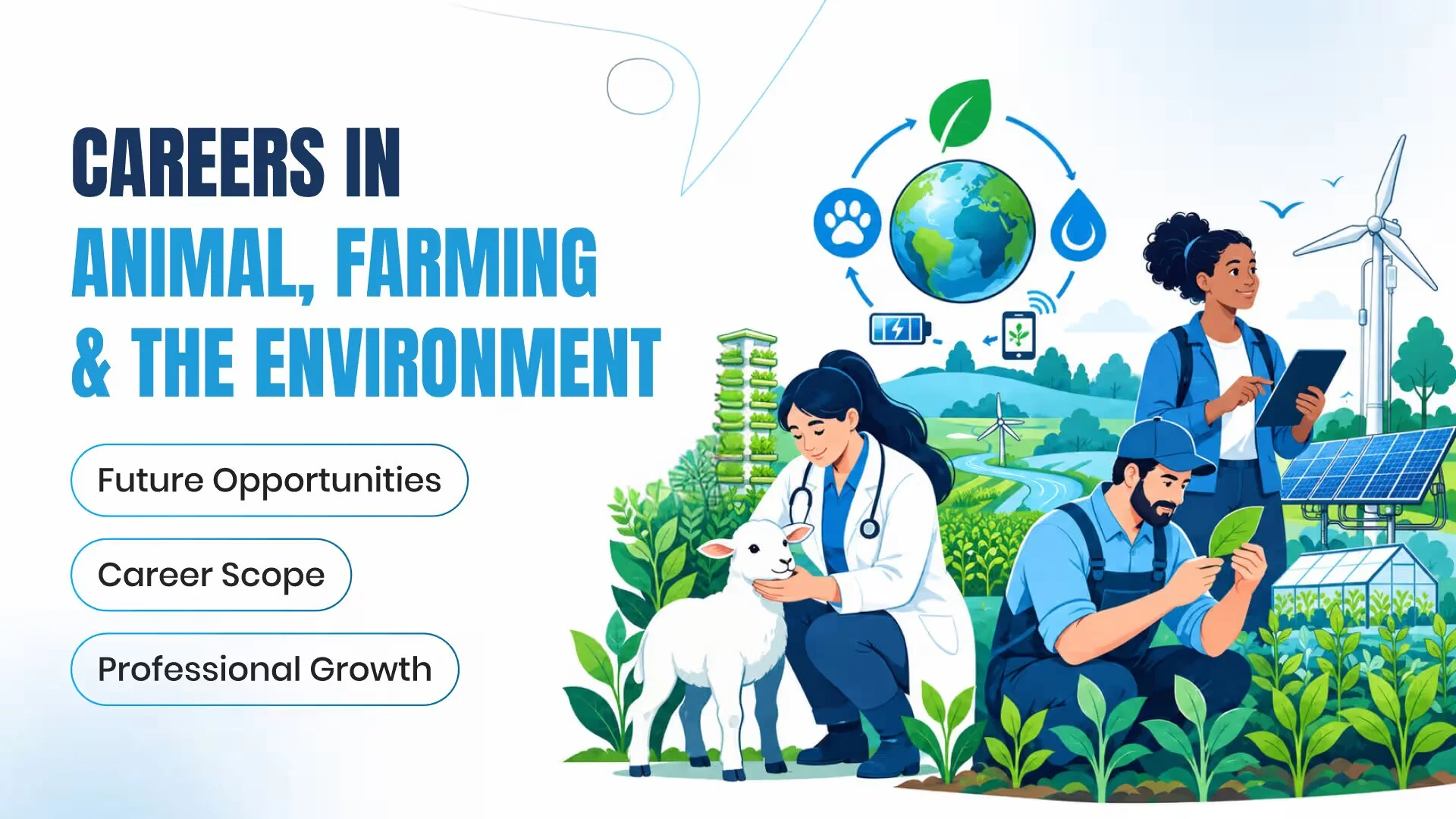
Are you passionate about animals, agriculture, nature or protecting the environment? Have you ever considered turning that passion into a rewarding profession? Careers in animal care, farming and environmental science are expanding into diverse areas that go far beyond traditional farming and wildlife conservation.
With growing interest in sustainable agriculture, animal healthcare, food production, biodiversity conservation and environmental management, students today have an increasingly wide range of career paths to explore. These fields combine science, technology, business and practical skills to address some of the important challenges facing society.
Careers in Animal, Farming & the Environment by Career Alternatives is a field-specific career guide designed to help readers explore opportunities across these sectors, understand different professional pathways and discover career possibilities that may not be widely known.
Whether you are a school student choosing a future stream, a graduate considering specialised education or someone interested in building a career around nature and sustainability, this book can help you take the first step towards understanding your options.
Why Choose a Career in Animal, Farming & the Environment?
Agriculture, animal care and environmental protection are interconnected with everyday life. Food production, livestock management, animal health, natural resource conservation and environmental sustainability all require people with specialised knowledge and practical skills.
As these sectors adopt new technologies and scientific approaches, career opportunities are also developing in areas such as precision agriculture, animal biotechnology, sustainable farming, wildlife research and environmental consultancy.
Some of the major factors shaping these career opportunities include:
- Sustainable food production: Growing attention to efficient farming, soil health, water management and responsible food production.
- Animal healthcare and welfare: The need for veterinary professionals, animal care specialists, nutrition experts and welfare professionals.
- Environmental conservation: Work involving biodiversity, forests, wildlife, pollution management and natural resource protection.
- Agricultural technology: The adoption of drones, sensors, data analytics, automation and precision farming.
- Climate and sustainability initiatives: Increasing demand for professionals who can support climate adaptation, environmental assessments and sustainable business practices.
These developments create opportunities for people with different educational backgrounds, interests and professional ambitions. The qualifications and entry requirements, however, vary considerably between roles.
Future Career Opportunities in Animal, Farming & the Environment
The future of these sectors is not limited to traditional occupations. Scientific research, digital technology, entrepreneurship and specialised services are creating new ways to build a professional career.
1. Animal Healthcare and Veterinary Science
Animal healthcare is an important field for people interested in animal welfare, veterinary medicine and scientific research. Opportunities exist in veterinary hospitals, clinics, livestock healthcare, animal diagnostic laboratories and research organisations.
Potential career options include:
- Veterinary Doctor
- Veterinary Assistant
- Veterinary Technician
- Animal Health Specialist
- Animal Nutritionist
- Animal Welfare Professional
- Veterinary Researcher
With specialised education and relevant qualifications, professionals can pursue careers in clinical practice, animal disease prevention, livestock health management and animal research.
2. Modern Agriculture and Precision Farming
Agriculture is increasingly combining traditional knowledge with modern technology. Precision farming uses data, sensors, satellite imagery and other digital tools to help farmers monitor crops, manage resources and improve operational decisions.
Potential career options include:
- Agricultural Scientist
- Agronomist
- Precision Agriculture Specialist
- Agricultural Technology Consultant
- Soil Scientist
- Agricultural Extension Officer
- Farm Operations Manager
Professionals in this field may work with agricultural companies, research institutions, technology providers, government departments or farming enterprises.
3. Animal Farming, Dairy and Livestock Management
Livestock and dairy production require knowledge of animal nutrition, breeding, health, farm management and production systems. Modern farming enterprises also need people who can manage operations, maintain quality standards and improve productivity.
Potential career options include:
- Livestock Farm Manager
- Dairy Farm Manager
- Poultry Farm Manager
- Animal Breeding Specialist
- Livestock Production Officer
- Dairy Technology Professional
- Animal Feed Specialist
Entrepreneurial opportunities may also exist in dairy production, poultry farming, animal feed manufacturing and other livestock-related businesses. These ventures require suitable investment, technical knowledge, market research and compliance with applicable regulations.
4. Wildlife Conservation and Biodiversity
Wildlife conservation and biodiversity management involve protecting animal species, preserving natural habitats and maintaining ecological balance. These careers may combine fieldwork, scientific research, data collection, education and environmental management.
Potential career options include:
- Wildlife Biologist
- Wildlife Conservation Officer
- Zoologist
- Ecologist
- Wildlife Research Assistant
- Biodiversity Specialist
- Wildlife Rehabilitation Professional
Employment opportunities may be available with conservation organisations, research institutions, wildlife projects, zoos, sanctuaries and relevant public-sector departments. Many specialised research and scientific roles require postgraduate qualifications or field experience.
5. Environmental Science and Sustainability
Environmental science brings together biology, chemistry, geography, engineering and other disciplines to understand and address environmental challenges.
As organisations work on resource efficiency, pollution control and environmental compliance, professionals with relevant technical and scientific knowledge can contribute across multiple industries.
Potential career options include:
- Environmental Scientist
- Environmental Consultant
- Environmental Officer
- Sustainability Specialist
- Environmental Impact Assessment Professional
- Waste Management Specialist
- Natural Resource Management Professional
These roles can involve environmental monitoring, assessments, sustainability reporting, pollution management and conservation projects. Specific roles may require professional training, relevant degrees or regulatory knowledge.
6. Fisheries, Aquaculture and Aquatic Resources
Aquaculture and fisheries involve the responsible production and management of aquatic organisms and the conservation of aquatic ecosystems. Scientific methods and modern production systems can support fish farming, aquatic health and resource management.
Potential career options include:
- Aquaculture Specialist
- Fisheries Officer
- Fish Farm Manager
- Aquatic Biologist
- Fish Nutrition Specialist
- Aquaculture Researcher
- Fisheries Extension Professional
These professionals may work in fish farms, hatcheries, laboratories, research organisations, seafood production businesses and fisheries-related government departments.
7. Environmental Technology and Green Entrepreneurship
Technology and entrepreneurship are creating additional opportunities in areas related to sustainability and resource management. Individuals with suitable technical, scientific and business skills can explore careers or start ventures that address environmental and agricultural needs.
Potential areas include:
- Sustainable Agriculture Consultancy
- Organic Farming Enterprises
- Agricultural Equipment and Technology Services
- Waste Recycling and Resource Recovery
- Environmental Monitoring Services
- Sustainable Product Development
- Nature-Based Tourism
Entrepreneurship in these areas requires more than an interest in the environment. Business planning, operational expertise, financial management and an understanding of local demand are important for long-term sustainability.
What Will You Gain from the Careers in Animal, Farming & the Environment Book?
Choosing a career becomes easier when you have access to organised information about different professions and the opportunities available within a field. This book brings together career areas related to animals, farming and the environment in one focused collection.
Key Benefits of This Book
1. Explore multiple career pathways
Discover career possibilities across agriculture, animal care, farming, conservation and environmental sustainability. Exploring several related fields can help you identify options that match your interests.
2. Discover careers beyond traditional farming
Understand that agriculture and animal-related professions extend into science, technology, research, business management, environmental protection and specialised services.
3. Identify career interests
Explore different professional areas to develop a better understanding of the subjects and types of work that interest you, helping you make more informed educational and career decisions.
4. Understand emerging professional fields
Learn about developing areas such as precision agriculture, sustainable farming, aquaculture and environmental management, and explore how technology and scientific innovation are changing these sectors.
5. Make informed educational decisions
Use career information as a starting point for researching suitable academic streams, degree programmes, vocational training and specialised qualifications for your preferred career.
6. Discover diverse employment sectors
Explore the range of workplaces associated with these fields, including farms, veterinary facilities, laboratories, research centers, conservation organisations, agricultural businesses and environmental consultancies.
7. Explore career opportunities in one place
Instead of beginning your research from scratch, use a field-specific guide to organise your exploration of animal, farming and environmental careers.
8. Support long-term career planning
Develop a clearer understanding of possible career directions and identify the next steps you may need to take, including further education, skill development, practical experience or professional training.
Who Should Read This Book?
This career guide can be useful for people at different stages of their education and professional journey.
School Students (After Class 10 and 12)
Students interested in biology, agriculture, animals or the environment can explore career options before deciding on their next academic step. The book can help them discover professions beyond the commonly known choices.
College Students and Graduates
Students pursuing agriculture, zoology, biotechnology, environmental science, veterinary-related subjects and other relevant disciplines can use career exploration to understand potential professional directions.
Animal Lovers and Nature Enthusiasts
People who enjoy working with animals, exploring nature or protecting wildlife can discover how their interests relate to specialised professional opportunities.
Aspiring Farmers and Entrepreneurs
Individuals interested in agriculture, livestock, dairy, poultry, aquaculture or sustainability-related businesses can explore the different professional areas connected to these sectors.
Parents, Teachers and Career Counsellors
Parents and educators can use the guide as a resource for discussing career possibilities with students and encouraging informed exploration of different fields.
Skills That Can Help You Build a Career in These Fields
Alongside academic qualifications, a combination of technical and personal skills can be valuable in animal, farming and environmental professions.
- Scientific understanding: Knowledge of biology, environmental science, agriculture or other relevant subjects.
- Observation and analytical skills: Ability to collect information, interpret findings and understand practical problems.
- Technical knowledge: Familiarity with relevant equipment, digital tools, laboratory techniques or modern farming systems.
- Problem-solving: Ability to respond to challenges involving animal health, agricultural production and environmental management.
- Communication and teamwork: Skills needed to collaborate with farmers, researchers, communities, clients and other professionals.
- Adaptability: Willingness to learn new methods, technologies and scientific developments.
The skills required depend on the chosen occupation. Practical training, internships, field experience and appropriate academic qualifications can help readers prepare for their preferred career.
The Future of Animal, Farming & Environmental Careers in India
India's agricultural and allied sectors connect food production, rural livelihoods, animal husbandry, fisheries, scientific research and environmental management. This creates a broad range of career areas for students interested in contributing to these sectors.
In the coming years, developments in agricultural technology, animal health, sustainable resource management, food systems and conservation will continue to influence the skills and expertise required in these fields.
For students in West Bengal and across India, areas such as fisheries, dairy, agriculture, animal healthcare, environmental science and food production may provide different routes into employment, research, entrepreneurship and public service.
However, career opportunities differ by location, qualification, experience, employer and market demand. Understanding these differences before choosing a course or profession is an important part of career planning.
Build Your Career with the Right Knowledge
A career in animal care, farming or environmental science can combine professional development with the opportunity to contribute to food systems, animal welfare and the natural environment.
But finding the right path begins with exploring your options and understanding what each profession involves.
Careers in Animal, Farming & the Environment by Career Alternatives is a specialised guide for readers who want to explore these fields, discover different professional possibilities and make more informed decisions about their future.
Whether your ambition is to work with animals, develop modern farming practices, contribute to wildlife conservation or pursue environmental sustainability, this book can help you begin exploring the opportunities available.
Explore the Careers in Animal, Farming & the Environment Book
Discover different career possibilities, expand your knowledge and take the first step towards planning your future.
Explore the book and its seven subtopics on Career Alternatives:
https://www.careeralternatives.in/career-book/animal-farming-environment
Frequently Asked Questions
1. What career options are available in animal, farming and environmental science?
Career options include veterinary science, animal healthcare, livestock management, agricultural research, precision farming, fisheries, wildlife conservation, environmental consultancy and sustainability management. The suitable pathway depends on your interests and qualifications.
2. Is agriculture a good career option for the future?
Agriculture includes a wide range of professional areas, from crop science and farm management to biotechnology, agricultural technology and food production. Its future opportunities depend on evolving technologies, investment, market conditions and the skills of individual professionals.
3. Can I build a career working with animals?
Yes. Depending on your education and training, you can explore veterinary medicine, animal care, livestock management, animal nutrition, wildlife conservation, zoology and animal research.
4. What can I do after studying environmental science?
Environmental science graduates may explore roles in environmental monitoring, sustainability, conservation, waste management, research and environmental consultancy. Some positions require additional qualifications or specialised training.
5. Who can benefit from the Careers in Animal, Farming & the Environment book?
The book is intended for students, graduates, aspiring professionals, animal lovers, aspiring entrepreneurs, parents and educators interested in exploring careers related to animals, farming and the environment.
6. Where can I find the Careers in Animal, Farming & the Environment book?
You can explore the book and its seven subtopics on the Career Alternatives website:
https://www.careeralternatives.in/career-book/animal-farming-environment
Explore Your Future in Animal, Farming & the Environment
Discover seven career subtopics and explore professional opportunities across these fields.